Factory automation is moving from large-scale operations into mid-range furniture manufacturing. This shift affects lead times, unit costs, and quality control. Buyers need to plan for incremental adoption rather than full robotic floors to maintain competitive pricing and reliability.
- Factory automation is now practical for mid-range furniture factories, not just high-end or mass-market producers.
- Buyers should evaluate automation based on specific process bottlenecks, not general "tech" upgrades.
- Incremental adoption reduces risk and allows for gradual shifts in production efficiency and cost structure.
- Quality control and maintenance capabilities are as important as the automation technology itself.
- Contract terms should reflect the factory's automation roadmap and training requirements.
Why Mid-Range Furniture Manufacturers Are Automating Now
The mid-range segment sits in a difficult position. Buyers expect quality comparable to premium goods but demand prices near the mass-market floor. Labor costs in many manufacturing regions continue to rise, while consumer demand for consistent finish quality and shorter lead times has not decreased. For manufacturers, the only way to close that gap is to reduce variability and increase throughput without proportional increases in headcount.
Factory automation offers a path to this balance. It is not about replacing every worker with a robot. It is about removing the repetitive, error-prone, and physically demanding steps from the production line. A factory that automates edge profiling, drilling, or assembly of flat-pack components can standardize output. This consistency allows the quality team to focus on final inspection rather than catching defects that slipped through manual work.
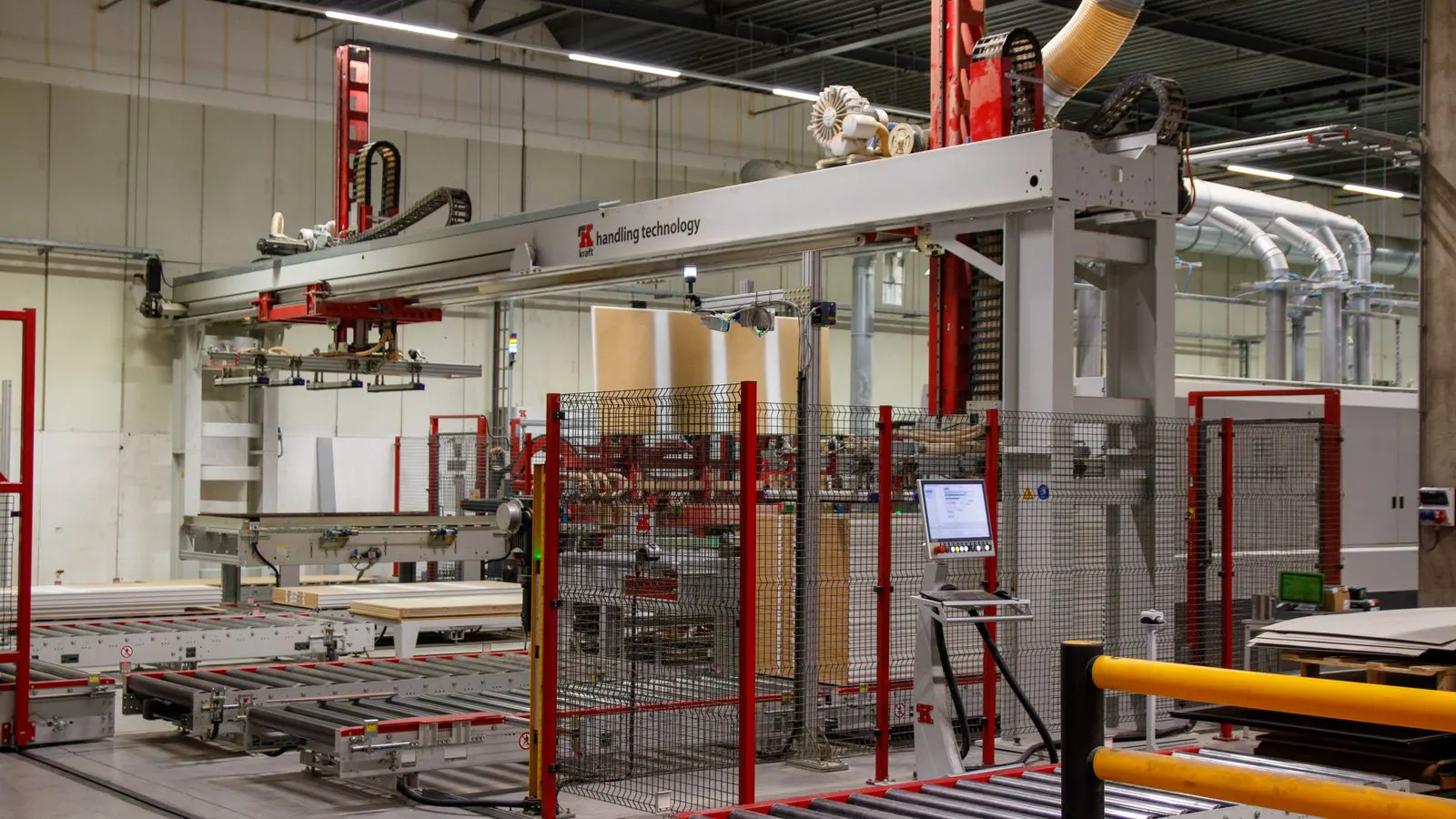
The shift is visible in how suppliers are structuring their sales pitches. Instead of claiming “high quality” as a general statement, factories now show their automation levels. They demonstrate CNC routing centers, robotic paint booths, or automated palletizing systems. For buyers, this changes the negotiation. You are no longer buying a promise of quality. You are buying a verified production capability.
How Automation Affects Lead Times and Unit Costs
The impact on lead times is often more immediate than the impact on unit costs. A factory with automated drilling and edge banding can process panels at a steady pace, independent of worker fatigue or skill level. This steady state allows for more reliable scheduling. When a factory can promise a 20-day lead time and actually deliver it, the buyer gains a significant advantage in their own supply chain.
Unit cost reduction is more gradual. Initial capital expenditure for automation equipment is high. However, over time, the cost per unit drops as the factory scales output. The key is utilization. If a factory installs a high-speed paint line but only runs it at 40% capacity because orders are inconsistent, the cost savings are minimal. The factory needs a steady flow of mid-range SKUs to justify the automation.
Buyers should look at the factory’s order mix. A factory that automates only for large, repetitive orders may not be suitable for a mid-range brand that runs smaller batches of diverse items. The automation must match the volume and variety of the product line. If the factory automates a process that only applies to 10% of your order, the benefits will be limited.
| Process Area | Manual Baseline | Automated Outcome | Buyer Consideration |
|---|---|---|---|
| Panel Drilling | Variable depth, manual setup | Consistent depth, digital tooling | Check for digital design transfer |
| Edge Banding | Heat-activated, labor intensive | High-speed application, auto trimming | Look for consistent adhesive application |
| Finishing | Hand spray, variable thickness | Robotic spray, even coverage | Verify paint waste metrics |
| Assembly | Manual fastening, slow pace | Jigs and semi-automation | Check for torque verification |
| Packaging | Manual wrapping, variable space | Automated packing, optimized space | Assess damage rates in transit |
The Shift from “Headcount” to “Skill Mix”
A common misconception is that automation eliminates the need for skilled labor. In reality, it changes the skill mix. The factory no longer needs as many manual operators for repetitive tasks. Instead, it needs technicians who can maintain the machines, program the CNCs, and troubleshoot software issues.
This shift affects how a factory manages its workforce. During peak seasons, a fully manual factory struggles to find enough trained workers to maintain quality. An automated factory can scale output by running machines longer or adding shifts without the same hiring bottleneck. The workers are not gone; they are moved to higher-value tasks like quality control, machine setup, and final assembly.
For buyers, this means the factory’s operational stability improves. A factory with a skilled technical team is less vulnerable to labor shortages. They can maintain production continuity even in regions where manual labor is scarce. This stability is a key factor in reducing supply chain risk for mid-range brands.
Quality Control in an Automated Environment
Automation does not guarantee quality, but it changes how quality is measured. In a manual environment, quality is often judged by visual inspection at the end of the line. In an automated environment, quality can be monitored at every step. Sensors can detect material defects before they reach the assembly stage. Cameras can verify the alignment of joints. Torque sensors can confirm that fasteners are tightened to the correct spec.
This shift allows for a more data-driven approach to quality. The factory can identify trends in defect rates. If a specific batch of wood has higher swelling rates, the automation can flag it before the product is finished. This proactive approach reduces waste and rework. It also provides buyers with better transparency. Instead of just receiving a final inspection report, you can receive data on process consistency.
However, this requires the factory to have the right software and data management systems. If the automation equipment is not integrated with a quality management system, the data is lost. Buyers should ask how the factory captures and reports process data. A factory that can show you the consistency of their edge banding or paint application over time is a stronger partner than one that only shows final product samples.
Planning for Incremental Adoption
Most mid-range factories are not replacing their entire production line with robots. They are adopting automation incrementally. They start with one process, measure the impact, and then move to the next. This approach reduces financial risk and allows the factory to learn from the new technology.
Buyers should encourage this incremental approach. Do not demand full automation as a condition of the contract. Instead, ask for a roadmap. How does the factory plan to upgrade its production over the next two to three years? Which processes are they considering for automation next? This shows you the factory’s long-term commitment to improving production efficiency.
The roadmap should be specific. It should name the processes, the expected timeline, and the intended benefits. For example, “The factory plans to install an automated drill press in the spring of next year to improve consistency in hole placement for the 600 series.” This level of detail allows you to assess the factory’s seriousness and capability.
How to Evaluate Automation Capabilities During Audits
When you visit a factory, look beyond the shiny new machines. Check how they are integrated into the workflow. Is the CNC center fed by a reliable material handling system? Are the automated drill presses connected to a digital design database? Is the paint booth maintained by a specialized technician?
Ask the factory to show you their production floor in action. Observe the flow of materials. Is there a bottleneck where manual work slows down the automated line? Is there a queue of finished panels waiting for manual assembly? These bottlenecks reveal where the automation is not yet delivering its full potential.
Also, check the maintenance records. Automation equipment requires regular maintenance to perform at peak levels. A factory that neglects maintenance will see increased downtime and reduced quality. Ask for their maintenance schedule and recent service reports. A factory that can show a consistent maintenance history is a better indicator of long-term reliability than the brand of their machines.
Contract Terms and Technology Roadmaps
The contract should reflect the factory’s automation capabilities and roadmap. If the factory is investing in new technology, they may need longer lead times during the transition. The contract should allow for this. It should also specify the quality standards that the automation is expected to meet.
Include clauses that protect you from technology-related disruptions. What happens if an automated system fails? How quickly can the factory revert to manual processes? What is the expected downtime? These questions are critical for ensuring supply chain continuity.
Finally, discuss the factory’s training programs. Automation requires skilled operators. If the factory is investing in training, it is a sign of their commitment to maintaining production efficiency. Ask how they train their staff on new systems and how they ensure that the training is up to date with the latest software updates.
Final Considerations for Buyers
Factory automation is not a one-time purchase. It is an ongoing relationship between technology and process. For mid-range furniture brands, the goal is to find a factory that is actively improving its production capabilities. Look for signs of investment, training, and data management.
The factory you choose will shape your cost structure and lead times. A factory with a clear automation roadmap and a skilled technical team will be a more reliable partner in the long run. Focus on the process, not just the product. The quality of the factory’s production system is just as important as the quality of the furniture they make.
Frequently asked questions
What is the most common automation in mid-range furniture factories?
Edge banding, panel drilling, and paint application are the most common areas for automation in mid-range furniture factories. These processes benefit from high volumes and repetitive tasks.
Does factory automation increase the cost of furniture?
Initially, automation increases capital costs. Over time, it reduces unit costs by improving production efficiency and reducing waste. The break-even point depends on order volume and consistency.
How do I know if a factory's automation is effective?
Look for data on process consistency, such as defect rates and cycle times. A factory with effective automation will be able to show you metrics that demonstrate stable output and high quality.
Can small mid-range brands work with automated factories?
Yes, but the factory must be able to handle smaller batches. Look for factories that use flexible automation, such as CNCs with digital tooling, rather than highly specialized robotic lines.
What should I ask about automation during a factory audit?
Ask about the maintenance schedule, the integration with the quality management system, and the factory's roadmap for future upgrades. These questions reveal the factory's commitment to long-term production efficiency.